About the Online LPC Program

27 Months

to complete

62–68

units

Flexible

study options

WSCUC

accreditation

The online Master of Arts in Clinical Psychology program from the Pepperdine Graduate School of Education and Psychology provides academic and clinical training for individuals who intend to pursue licensure as a professional counselor.

Coursework supports licensure-focused pathways, with requirements that vary by state.

This program is designed to provide the academic preparation required for professional counseling licensure pathways in participating states. Licensure requirements vary by state, and students should review the requirements of the state where they intend to practice before enrolling.

What Does a Licensed Professional Counselor Do?

Licensed Professional Counselors (LPCs) support individuals, families, and groups in managing mental health and emotional challenges.

They may work with clients experiencing:

  • Anxiety and depression
  • Trauma and grief
  • Substance use concerns
  • Behavioral and emotional difficulties

In practice, LPCs:

  • Assess mental health needs
  • Develop and guide treatment plans
  • Provide individual and group counseling
  • Support long-term wellbeing

Who This Program Is For?

This program is designed for individuals who:

  • Want to pursue licensure as a professional counselor
  • Are motivated to support mental health and emotional wellbeing
  • Are transitioning into the mental health field from another career
  • Prefer flexible, online learning combined with in-person clinical training
  • Are seeking a structured pathway into counseling practice

Applicants from a range of academic backgrounds are encouraged to apply.

Depending on your state, this pathway may support broader counseling and therapy-related licensure goals. Students should review their state licensing requirements and consult an enrollment specialist to determine the best fit for their professional objectives. 

Jump to:

Curriculum and Learning

Clinical Training

Faculty

Licensure

Careers

FAQs

Request Info

Curriculum and Learning Experience

Build the Skills to Become a Licensed Professional Counselor

Through online coursework and in-person clinical training, you will develop foundational counseling, assessment, and clinical intervention skills designed to support professional counseling practice and licensure pathways. You will build:

  • Clinical assessment and diagnostic skills
  • Evidence-based counseling and intervention techniques
  • Ethical and professional decision-making
  • Communication and client relationship skills
  • Applied understanding of psychological theory

Review the full online clinical psychology curriculum to explore course sequencing, practicum preparation, and elective options.

Structured Progression for Clinical Readiness

Coursework follows a defined sequence that builds knowledge and applied skills over time. You’ll study:

  • Foundational topics in counseling theory, ethics, and diagnosis
  • Evidence-based therapeutic approaches and interventions
  • Advanced areas of clinical practice and diverse populations
  • Supervised practicum experiences completed across multiple terms

Areas of Study

Coursework may include:

  • Counseling and psychotherapy techniques
  • Clinical diagnosis and assessment
  • Ethical and legal standards in counseling
  • Human development across the lifespan
  • Multicultural counseling

Counseling Electives and Advanced Areas of Study

The coursework is designed to help you build foundational and advanced counseling skills while preparing for clinical practice across diverse populations and treatment settings.

Areas of study may include:

PSY 612 Theories of Counseling and Psychotherapy
Explore major counseling and psychotherapy theories while developing practical approaches to clinical intervention and treatment planning.

PSY 606 Interpersonal Skills and Group Therapy
Develop communication and group facilitation skills used in therapeutic and behavioral health settings.

PSY 622 Multicultural Counseling
Examine culturally responsive counseling approaches while exploring how identity, systems, and lived experience influence mental health care.

PSY 623 Ethics and Law for Mental Health Professionals
Study ethical frameworks, legal considerations, and professional standards relevant to counseling and clinical practice.

PSY 624 Individual and Family Treatment of Substance Abuse
Explore treatment approaches for substance use disorders while examining the impact of addiction on individuals and family systems.

PSY 603 Assessment of Individuals, Couples, and Families
Build assessment and diagnostic skills used to evaluate mental health concerns across varied clinical populations.

Program Structure and Pacing

Before you begin, it helps to understand how the program is structured and what your timeline may look like.

You will complete 6268 units of coursework, delivered across a sequence designed to build your knowledge and clinical skills over time.

  • Complete the program in approximately 27 months with full-time study.
  • Extend up to 7 years with a part-time schedule and reduced course load.
  • Progress through 812 sessions, each made up of 2–3 courses.
  • Courses typically range from 13 units, allowing for manageable pacing.

You can choose a full-time or part-time path depending on your schedule, with the flexibility to move at a pace that supports your commitments.

Jump to:

Curriculum and Learning

Clinical Training

Faculty

Licensure

Careers

FAQs

Request Info

Clinical Training

Supervised Practicum Experience

Deepen your understanding of clinical psychology as you step into real-world settings, working directly with clients and learning from experienced practitioners.

Clinical training gives you the opportunity to explore your professional interests, apply what you have learned, and begin shaping your approach as a counselor. Through supervised practicum experiences, you gain exposure to real client interactions while building the confidence and practical skills needed for professional practice.

  • Complete practicum hours in approved clinical settings
  • Learn directly from experienced practitioners and supervisors
  • Apply your knowledge in real client scenarios as you develop your counseling approach

Most states require 2,000–4,000 total hours of supervised clinical experience for licensure, a portion of which may be completed during your graduate program, with the remainder accrued after graduation.

How Clinical Training Works

You complete your clinical training in person at approved practicum sites, with opportunities available within or near your community. Pepperdine’s clinical training support team provides guidance throughout the process, helping you understand requirements and prepare for placement. While support is available, you are responsible for identifying, applying to, and securing your own practicum placement.

What You Will Gain

Through your practicum experience, you will work with clients in real-world settings, developing core counseling and assessment skills while completing supervised clinical hours aligned with program requirements. Most practicum experiences are unpaid.

Faculty Spotlight

Learn from faculty who bring real-world clinical experience into every aspect of your training, combining academic insight with practical application.

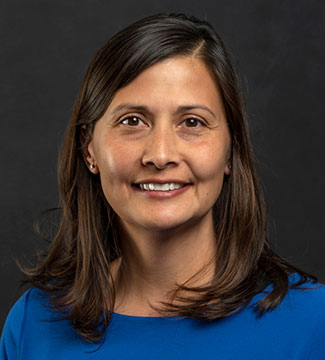
Amy Tuttle Guerrero, PhD

Director of Clinical Training for MA in Clinical Psychology Online Program

Associate Professor

Psychology Division, Online Psychology Division, Graduate School of Education and Psychology

Dr. Amy Tuttle Guerrero is a licensed clinical psychologist whose work focuses on trauma, resilience, and culturally responsive care. She brings experience in both clinical practice and higher education, supporting students as they develop foundational counseling skills and clinical insight.

Her teaching emphasizes evidence-based approaches and the application of psychological theory in real-world settings.

Learn more on the GSEP Meet Our Faculty page.

Carrie Castaneda-Sound, PsyD

Program Director of the MA in Clinical Psychology (Evening Format)

Associate Professor

Psychology Division, Graduate School of Education and Psychology

Dr. Carrie Castaneda-Sound is a licensed psychologist with experience in clinical assessment, therapy, and supervision. Her work spans community mental health, education, and clinical training environments.

She supports students in developing practical counseling competencies, with a focus on ethical practice and client-centered care.

Learn more on the GSEP Meet Our Faculty page.

Jump to:

Curriculum and Learning

Clinical Training

Faculty

Licensure

Careers

FAQs

Request Info

Licensure and State Requirements

This program provides academic preparation for those planning to pursue licensure as a professional counselor. The curriculum is designed to support licensure pathways, with requirements that vary by state.

After graduation, you will still need to complete additional supervised experience and pass required examinations before becoming licensed.

As you move through the program, you will be responsible for understanding and meeting the licensure requirements for the state where you plan to practice. Reviewing your state licensing board guidelines before enrolling can help you plan your path with confidence.

LPC Licensure Requirements

To pursue licensure as a Licensed Professional Counselor (LPC), you will first need to earn a bachelor’s degree. Applicants from a range of academic backgrounds are encouraged to apply.

You will then typically need to:

  1. Earn your master’s in clinical psychology
  2. Complete supervised clinical training and fieldwork hours as required by your state licensing board
  3. Apply for licensure and complete any required examinations or post-degree supervised experience

Licensure requirements vary by state. Prospective students should review the requirements for the state in which they intend to practice before enrolling.

Review the application requirements to learn more about admissions criteria and required materials.

LPC vs LMFT: Understanding your options

You are currently exploring the LPC (Licensed Professional Counselor) pathway, which focuses on individual and group counseling across a range of mental health concerns. As you research your options, you may also come across the LMFT (Licensed Marriage and Family Therapist) pathway.

While these pathways share some academic and clinical foundations, they prepare students for different areas of practice. The LPC pathway takes a broader approach to counseling and mental health treatment, while the LMFT pathway centers more specifically on relationships, including couples and family systems.

Pepperdine offers separate pathways designed to support different licensure goals. Students interested in marriage and family therapy should explore the LMFT pathway, while students interested in broader counseling practice should explore the LPC pathway. 

Depending on your state and professional goals, some coursework and clinical training elements may overlap, allowing you to explore both directions as you refine your focus.

TrackOutcomeLicensure pathFocus
LPC
Broad counseling
State licensure
Diagnosing and treating mental, emotional, and behavioral concerns in individuals and groups
LMFT
Family systems
State licensure
Relational dynamics, including couples and family systems

Not sure which path is right for you?
Learn more about the LMFT pathway and how it compares.

Learn More About the LMFT Path

State Availability and Educational Requirements

LMFT pathway

The LMFT pathway is only available in California.

LPC pathway

The LPC pathway is currently available in the following states:

Alaska

Arizona

Delaware

Georgia

Idaho

Illinois

Maryland

New Hampshire

New Jersey

Oklahoma

Oregon

Tennessee

Texas

Virginia

Washington D.C.

West Virginia

View LPC Licensure Disclosures

Jump to:

Curriculum and Learning

Clinical Training

Faculty

Licensure

Careers

FAQs

Request Info

Careers and Outcomes With an LPC License

Graduates may pursue counseling and mental health roles across a range of clinical, educational, healthcare, and community settings, depending on licensure, experience, and location.

Possible LPC Career Paths

Career PathDescription
Licensed Professional Counselor (LPC or equivalent, after licensure)
Licensed clinicians supporting individuals with emotional, behavioral, and mental health concerns.
Associate Professional Counselor / Pre-licensed Counselor
Supervised clinicians completing post-graduate clinical experience requirements.
Mental Health Counselor
Professionals supporting clients through counseling, treatment planning, and behavioral interventions.
Behavioral Health Counselor
Clinicians focused on emotional wellness, coping strategies, and behavioral support.
Substance Abuse Counselor
Specialists supporting individuals navigating addiction, recovery, and substance use treatment.
Child and Adolescent Counselor
Counselors working specifically with children and teens across school, community, or clinical settings.
School-Based Counselor or Therapist
Mental health professionals supporting students within educational environments.
Crisis Intervention Specialist
Professionals assisting individuals experiencing acute emotional or mental health crises.
Community Mental Health Practitioner
Counselors working in nonprofit, public health, or community-based mental health settings.
Case Manager / Clinical Coordinator
Professionals coordinating care plans, referrals, and client support services.
Related Roles in Advocacy or Program Development
Graduates may also pursue nonprofit, outreach, advocacy, or behavioral health program support roles depending on experience and interests.

Possible LPC Work Environments

Employer TypeDescription
Private Practice (after licensure)
Independent or group counseling practices serving individuals and families.
Hospitals & Healthcare Systems
Medical and integrated behavioral healthcare environments.
Community Mental Health Centers
Public or nonprofit clinics supporting diverse populations.
Schools & Educational Institutions
K–12 schools, colleges, and university counseling settings.
Government & Social Service Agencies
State and local organizations providing mental health and support services.
Nonprofit Organizations
Mission-driven organizations supporting community wellbeing and access to care.
Residential Treatment Centers
Inpatient and behavioral health treatment facilities.

Career Outlook for Counseling Professionals

Demand for counseling professionals is growing steadily. Employment is projected to increase by 17%—significantly faster than the average for most occupations.1

This growth reflects an ongoing need for mental health and substance use treatment services across a range of settings, including healthcare, community organizations, and social services.

Counseling professionals play an important role in supporting individuals and families, contributing to continued demand and long-term career opportunities.

Earning Potential

According to the U.S. Bureau of Labor Statistics, the median annual salary for substance abuse, behavioral disorder, and mental health counselors is approximately $59,190.2

Additional data suggests that Licensed Professional Counselors (LPCs) may earn an average annual salary of approximately $71,915, with earnings varying based on experience, location, and specialization.3

Entry-level roles may begin around $45,000 per year, while experienced professionals and those in specialized or private practice roles may earn upwards of $100,000 annually.4

Factors Influencing Earnings

Several factors can shape earning potential in this field.

  • Experience: Earnings typically increase as counselors move from entry-level roles into more advanced clinical or leadership positions
  • Location: Salaries can vary depending on geographic demand, with higher earnings often found in urban or high-need areas
  • Specialization: Expertise in areas such as trauma, addiction, or family therapy may lead to more advanced or higher-paying opportunities
  • Work setting: Private practice, hospitals, and specialized industries may offer higher earning potential compared to community-based roles

Counselors who pursue private practice or develop specialized expertise may have greater flexibility in how they earn and grow their income over time.

Career Support

Throughout your program, you will work closely with faculty who bring both academic expertise and real-world clinical experience into your learning. As active practitioners, they offer practical insight that helps you connect theory to the realities of working with clients.

In addition to faculty guidance, you will have access to career-focused support designed to help you prepare for your next step. These resources are available as you progress through your studies, particularly as you begin preparing for practicum and post-graduation opportunities.

Career support includes:

Résumé and CV guidance to help you present your experience and training effectively

Interview preparation to build confidence and readiness for clinical roles

Job search tools to support your transition into the counseling field

Learn more about Pepperdine’s online Master of Arts in Clinical Psychology and take the next step toward a career in professional counseling.

Request Information

Still have questions about licensure, curriculum, or career outcomes? Here are answers to some of the most common questions about the online LPC program.

Frequently Asked Questions About the Online LPC Program

  • Students who complete the program earn a Master of Arts in Clinical Psychology from Pepperdine University.

  • The Pepperdine Online Master of Arts in Clinical Psychology provides academic preparation for licensure. Additional requirements, including supervised experience and examinations, are required.

  • Both LPC and LMFT pathways support preparation for licensure in clinical settings.

    The LPC (Licensed Professional Counselor) pathway focuses more broadly on diagnosing and treating mental, emotional, and behavioral concerns in individuals and groups.

    The LMFT (Licensed Marriage and Family Therapist) pathway focuses on relational dynamics, including couples and family systems.

  • The program provides academic preparation aligned with licensure pathways.

    After graduation, most states require additional supervised clinical experience hours and one or more licensing examinations before full licensure can be obtained. Specific requirements vary by state.

    Students should review their state licensing board requirements to better understand post-graduation steps.

  • In some states, academic requirements for LPC and LMFT licensure may overlap.

    Students interested in multiple pathways should work with an academic advisor to plan their coursework.

  • Licensure requirements vary by state, including differences between California and non-California licensure pathways.

    Students are responsible for reviewing the requirements of the state in which they intend to practice. Review Pepperdine’s LPC licensure disclosures to better understand state-specific educational requirements and pathway information.

  • The program typically takes approximately 3 years to complete.

    • Minimum timeframe: about 27 months
    • Maximum timeframe: up to 7 years

    Students may choose full-time or part-time pacing.

  • Coursework is completed online. Clinical training is completed in person at an approved site in or near your community.

  • The program uses a combination of:

    • Asynchronous coursework, completed on your own schedule
    • Synchronous (live) online classes, where you engage with faculty and peers

    This structure supports both flexibility and interactive learning.

  • The program consists of 62–68 units of coursework.

    Topics may include:

    • Diagnosis and treatment of mental health conditions
    • Multicultural and diversity issues
    • Group therapy
    • Clinical intervention across the lifespan
    • Trauma-informed approaches
    • Psychopharmacology fundamentals
  • Yes. Clinical training is completed in person through practicum and internship experiences at approved sites in or near your community.

  • Students apply to approved sites and secure placements with support from Pepperdine’s clinical training team.

  • Securing a practicum site is a supported, student-led process.

    • Pepperdine provides guidance and access to approved sites
    • Students apply to and interview with sites directly
    • Students are responsible for securing a placement
  • Most practicum experiences are unpaid training positions.

    Some students may find paid opportunities, but this is not typical.

  • Pepperdine University is accredited by the WASC Senior College and University Commission (WSCUC).

    This program is designed to support licensure pathways. Because requirements vary by state, prospective students should confirm requirements with their state licensing board.

  • Courses are taught by faculty with experience in clinical practice and academic instruction, including licensed psychologists and counseling professionals.

  • No. The curriculum focuses on clinical practice, diagnosis, and evidence-based approaches.

    While Pepperdine is a Christian university, the program is academically focused and inclusive. Religious topics may be discussed in the context of cultural awareness.

  • Applicants must hold a bachelor’s degree from a regionally accredited institution.

    Application materials typically include:

    • Academic transcripts
    • Letters of recommendation
    • Statement of purpose

    A background in psychology is not required.

  • No. Applicants from a variety of academic backgrounds are encouraged to apply.

  • Tuition is calculated on a per-unit basis.

    For the most current cost information and financial aid options, prospective students should review the tuition and financial aid page.

  • Students have access to a range of academic, career, and technical support services.

    • Academic and clinical support
      • Guidance from a clinical training team
      • Tools to track practicum hours and documentation
      • Dedicated academic advising
    • Career services
      • Access to job and placement resources
      • Career coaching and application support
    • Technical and student support
      • 24/7 technical assistance
      • Student support services, including accessibility resources

Pepperdine University partners with 2U to support the delivery of these online programs. Pepperdine University has full control over the programs, including all core academic functions. Click here to learn more about 2U’s roles and responsibilities.

  1. Substance Abuse, Behavioral Disorder, and Mental Health Counselors. (2025). U.S. Bureau of Labor Statistics. Retrieved May, 2026. ↩︎
  2. Substance Abuse, Behavioral Disorder, and Mental Health Counselors. (2025). U.S. Bureau of Labor Statistics. Retrieved May, 2026. ↩︎
  3. 2026 How Much Does a Licensed Professional Counselor (LPC) Make? (2026). Research.com. Retrieved May, 2026.  ↩︎
  4. 2026 How Much Does a Licensed Professional Counselor (LPC) Make? (2026). Research.com. Retrieved May, 2026.  ↩︎